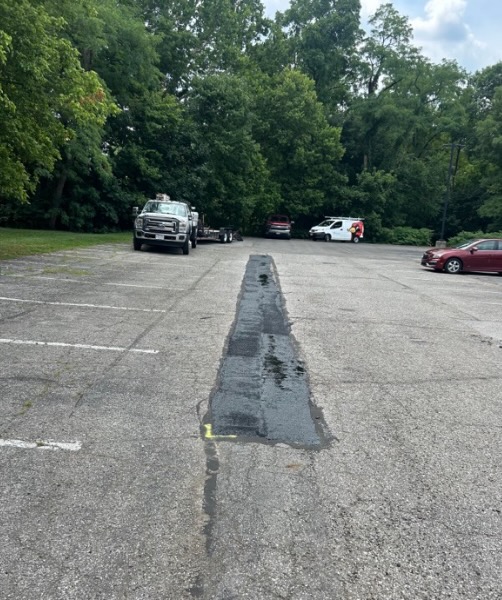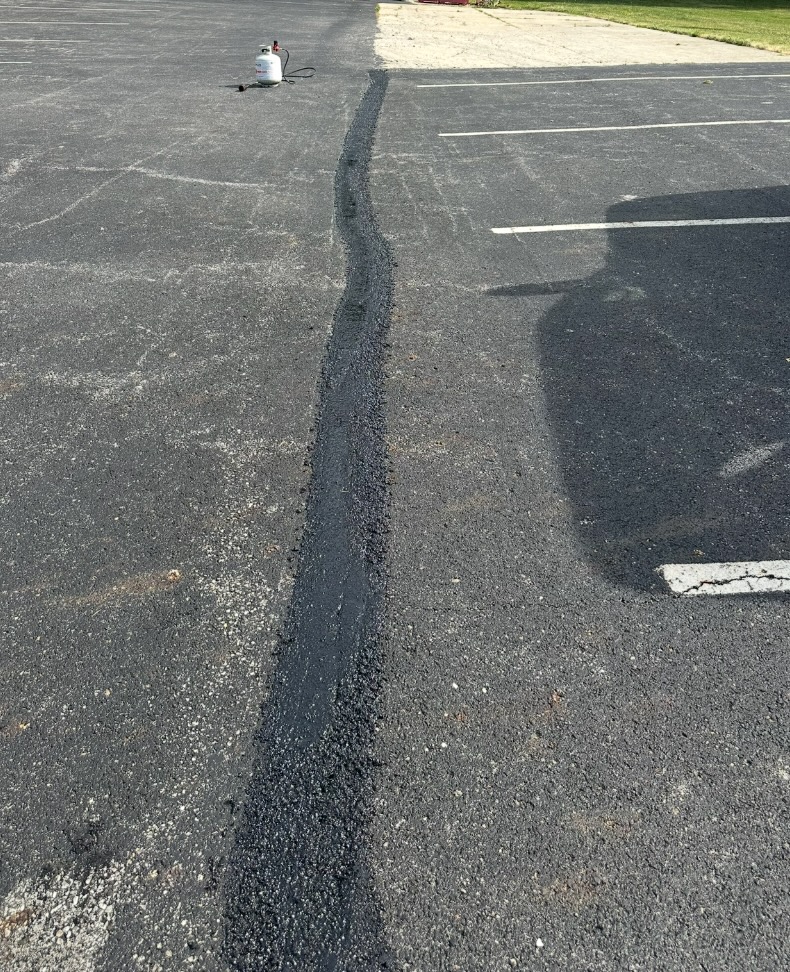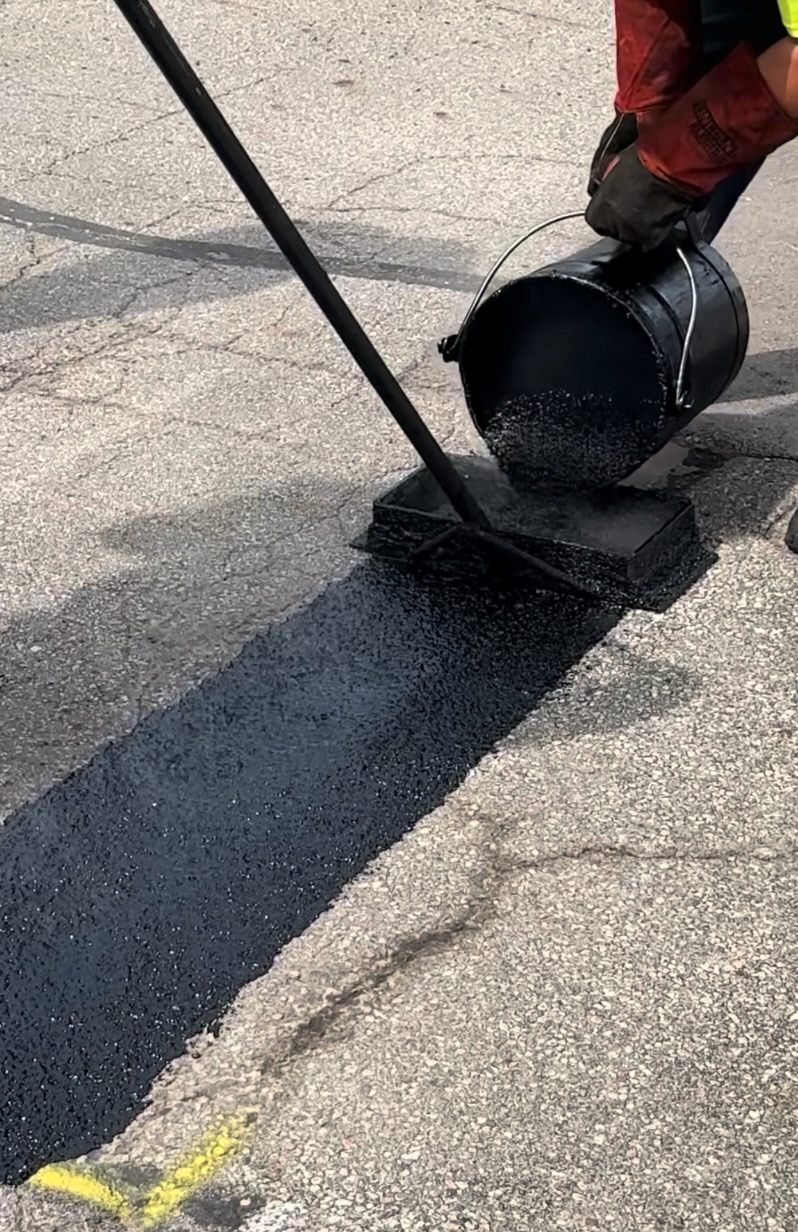
Asphalt mastic is a high-performance repair material designed for areas of pavement that take the most abuse. Made from a thick blend of asphalt binder and graded aggregates, mastic is far stronger and more flexible than standard crack filler or sealant. It’s commonly used to repair wide cracks, surface failures, joints, utility cuts, and areas with recurring wear.
What makes asphalt mastic so effective is how it works. Once applied, it bonds tightly to the existing pavement and cures into a dense, waterproof layer. This seal blocks out water, prevents further cracking, and reinforces weak spots in the asphalt. Because mastic remains flexible, it can expand and contract with temperature changes without breaking apart—one of the main reasons traditional repairs fail.
Asphalt mastic is especially valuable for extending the life of pavement. By addressing problem areas early and strengthening them at the surface, mastic repairs help prevent small defects from turning into costly replacements. It’s an ideal solution for parking lots, drive lanes, loading zones, and high-traffic areas where durability matters.
For property owners, asphalt mastic offers a smart balance of strength, longevity, and cost-effectiveness. It delivers long-lasting results while minimizing downtime, helping protect your pavement investment and keep surfaces safe, smooth, and professional-looking.
How Asphalt Mastic Differs from Crack Filler
While both asphalt mastic and crack filler are used to repair pavement, they serve very different purposes and are not interchangeable.
Crack filler is a rubberized asphalt material designed to seal narrow, non-structural cracks. It is poured or injected into cracks to block water intrusion and slow deterioration. Crack filler remains flexible but has limited strength and is not intended to support traffic loads. Over time, especially in wider cracks or high-traffic areas, crack filler can pull out, track, or reopen.
Asphalt mastic, by contrast, is a reinforced repair material made from asphalt binder and aggregate. It is designed for wide cracks, surface failures, joints, and areas experiencing repeated stress. Instead of simply filling a void, mastic creates a durable, load-bearing patch that strengthens the pavement surface. Once cured, mastic forms a dense, waterproof layer that resists traffic wear and holds up under thermal movement.
In short:
· Crack filler seals cracks to prevent moisture entry
· Asphalt mastic reinforces and restores damaged pavement areas
Using the correct material is critical. Crack filler is ideal for early-stage cracking, while asphalt mastic is the better solution when cracks widen, interconnect, or begin to break down the surrounding asphalt. Choosing mastic where crack filler would fail helps extend pavement life and reduces the need for more costly repairs.
Need a sealant? Choose Sheedy Sealcoating Inc.
If your asphalt surface shows signs of wear but does not yet require resurfacing, mastic sealcoating can help restore its durability and appearance. Learn how this option can extend the life of your pavement across Central Ohio—request your parking lot restoration estimate today.